NAVIGATING THE TRESSES OF CHANGE: Menopausal Hair – What to Expect & How to Manage It

Menopause, an inevitable and completely natural stage in a woman’s life, brings with it a cascade of hormonal shifts that can impact various aspects of health and well-being. While hot flushes, mood swings, and sleep disturbances often take centrestage, changes in hair health are equally common and can significantly affect self-confidence.
If you’re noticing your once luscious locks are now thinner, drier, or simply behaving differently, we can help. Our comprehensive guide will delve into the world of menopausal hair changes, offering practical advice on management and highlighting effective treatments available in Singapore.
The Hormonal Hair Rollercoaster: Perimenopause and Menopause
To understand why your hair might be undergoing changes, it is crucial to grasp the hormonal dance of perimenopause and menopause.
Perimenopause is the transition before menopause, often beginning in the late 30s or 40s of a woman. During this time, the ovaries gradually produce less oestrogen and progesterone. These fluctuations can be erratic, leading to a range of symptoms, including initial hair changes. Menopause is officially diagnosed when a woman has not menstruated for 12 months. By this stage, oestrogen or estrogen and progesterone levels have significantly declined and stabilised at a lower level.
These hormonal shifts have a direct impact on hair. Lower hormone levels shorten the growth (anagen) phase, causing more shedding and slower regrowth.
Furthermore, with the decrease in estrogen and progesterone, the relative influence of androgens (male hormones like testosterone, which women also produce) increases. On the scalp, androgens can shrink hair follicles, a phenomenon linked to female pattern hair loss. This often manifests as overall thinning, a widening parting, or a receding hairline. This same hormonal shift can also lead to increased hair growth in other areas, such as the face.
Changes in hair texture are common too. With less natural oil production, many women experience their hair becoming drier, more brittle, or coarser. The scalp may also feel drier or more sensitive during this stage. Reduced moisture and hormonal shifts often contribute to discomfort.
It is important to remember that while hormonal changes are a primary driver, other factors like genetics, stress, underlying medical conditions such as thyroid issues or nutritional deficiencies, and certain medications can also contribute to hair changes during this time.
Practical Guidance on Managing Menopausal Hair Changes
While you cannot stop perimenopause or menopause, you can take proactive steps to manage its impact on your hair.
Hair Care & Product Choices: Be Gentle, Be Smart
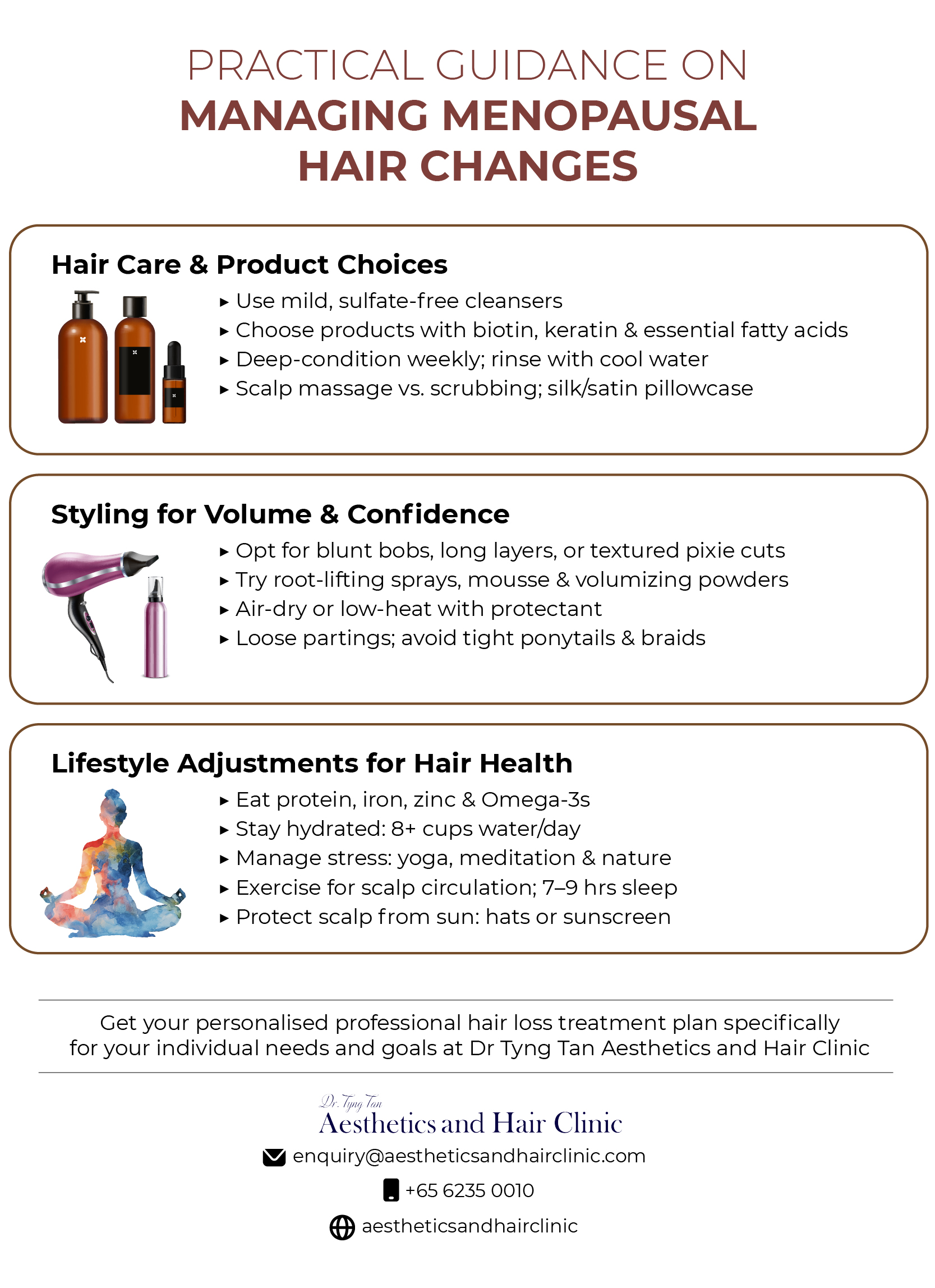
Managing menopausal hair starts with a gentle, thoughtful routine. Choose mild, sulfate-free shampoos and conditioners designed for thinning or ageing hair, as harsh formulas can worsen dryness.
Hydration is essential. Use a moisturising conditioner after every wash, focusing on mid-lengths and ends, and add a weekly deep-conditioning mask for extra nourishment.
When washing, massage the scalp gently with lukewarm or cool water. This boosts circulation without stripping natural oils. Limit heat styling as much as possible, and always apply a heat protectant when you do use tools. To reduce breakage, detangle wet hair with a wide-tooth comb and use a soft-bristle brush on dry hair. Avoid aggressive brushing. Switching to a silk or satin pillowcase can also minimise friction and nightly damage.
Styling for Volume and Confidence
Thinning hair can be styled in ways that create fullness. Haircuts like a blunt bob, textured pixie, or shoulder-length lob give the appearance of thicker hair. Soft layers can also help disguise thinning areas.
Explore volumising products such as mousse or root-lifting sprays, and try blow-drying your hair upside down to lift the roots. Textured styles like curls and waves add body, and using heatless curling methods can protect your hair from damage.
It is also advisable to avoid tight hairstyles like ponytails or buns that pull on follicles and can contribute to traction alopecia; opt for looser styles instead. Experimenting with a side parting can often create more volume than a centre part. For more noticeable thinning, products like hair fibres or scalp concealers can offer an immediate boost.
Lifestyle Adjustments for Hair Health
A holistic approach to your overall health can significantly impact your hair. Nutrition is fundamental; a balanced diet rich in protein, iron, zinc, and essential vitamins is crucial for healthy hair growth.
Key nutrients can be found in foods like lean meats, fish, eggs, dark leafy greens, nuts, and walnuts. Staying hydrated by drinking plenty of water is also important. Since stress can exacerbate hair shedding, incorporating stress-reducing activities like meditation or spending time in nature is vital.
Regular physical activity improves circulation to the scalp, while aiming for 7-9 hours of quality sleep each night supports overall bodily repair. Lastly, if your hair is thinning, protect your exposed scalp from the sun by wearing a hat or using a scalp sunscreen.
Hair Loss Treatments Available in Singapore
A look at popular hair loss treatments in Singapore reveals a range of options to suit different needs. From non-invasive therapies to minimally invasive procedures, individuals have several avenues to explore.
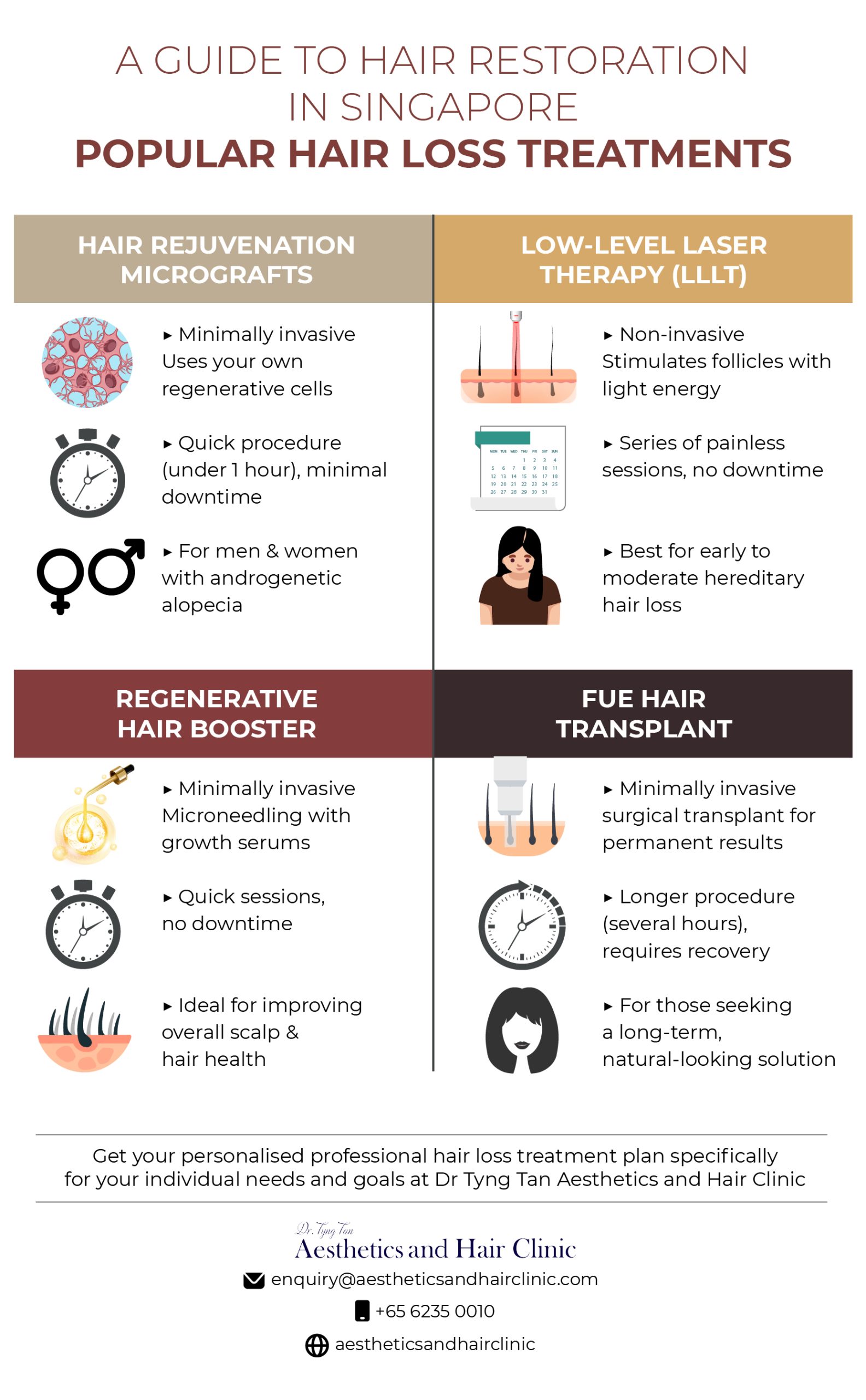
- Hair Rejuvenation Micrografts: This is a minimally invasive procedure that utilises a patient’s own cells to encourage hair growth. It involves taking a small tissue sample from the scalp, processing it to isolate regenerative cells, and then introducing these cells into the areas of hair loss. The procedure is typically quick, with minimal downtime, and can be used in combination with other hair loss treatments.
- Low-Level Laser Therapy (LLLT): This is a non-invasive treatment that employs focused light energy to stimulate hair follicles. This therapy is administered using a device placed over the head and is generally a painless procedure with no downtime. It is often indicated for individuals with hereditary hair loss in the early to moderate stages, and a series of treatments is typically required for optimal results.
- Regenerative Hair Booster: This is a non-surgical treatment system designed to improve hair and scalp health. The minimally invasive procedure combines microneedling with the application of specialised serums to improve circulation and deliver active ingredients to the hair follicles. It is presented as a safe option with no downtime.
- Follicular Unit Extraction (FUE): FUE is a minimally invasive surgical technique for hair restoration. The procedure involves the extraction of individual hair follicles from a donor area of the scalp and their subsequent implantation into the areas of thinning. It is designed to be a long-term solution that produces natural-looking results, as the transplanted follicles are the patient’s own. The procedure is performed under local anaesthesia and requires a period of recovery.
Note that the suitability and effectiveness of any hair loss treatment can vary between individuals. A consultation with a qualified medical professional is advisable to determine the most appropriate course of action based on the specific type and extent of hair loss, as well as the individual’s overall health and expectations.
Dr. Tyng Tan is a hair restoration specialist in Singapore, offering personalised solutions for your concerns. She is one of the few doctors in Singapore approved by the Singapore Medical Council to perform both Follicular Unit Extraction (FUE) and Follicular Unit Transplantation (FUT). Book a consultation to explore your options.

About Dr Tyng Tan
Dr Tyng Tan has over ten years of experience treating male pattern baldness with the minimally invasive, non-strip method known as FUE (Follicular Unit Extraction) Hair Transplantation.

Hair loss seems like a losing battle for thousands of men in Singapore. Grow Your Hair Back To Normal With Our Safe & Minor Surgical Hair Transplant Procedure.