STRESSED OUT STRANDS: Your Guide to Stress-Induced Hair Loss & Treatments

Hair loss. The very words can evoke anxiety. It’s a deeply personal issue affecting millions of men and women globally. According to recent research, significant stress can cause up to 70% of hair follicles prematurely transitioning into the resting (telogen) phase of the hair growth cycle. This type of hair loss is associated with increased cortisol levels, the body’s stress hormone. Regardless of age, whether you’re noticing a few too many hairs in your brush or more significant thinning, the experience can be distressing.
Stress is that pervasive force in our fast-paced modern lives that doesn’t just impact our mental and emotional well-being; it can visibly manifest in our hair. This guide aims to empower you with the knowledge to identify signs, understand types, and explore effective treatments for stress-induced hair loss.
The Science: How Stress Impacts Your Hair Growth Cycle
Before diving into the types of hair loss, it’s helpful to understand a little about your hair’s natural growth cycle, which has three main phases:
- Anagen (Growth Phase): This is when your hair is actively growing. It can last for several years.
- Catagen (Transitional Phase): A short phase where hair growth stops and the follicle shrinks.
- Telogen (Resting Phase): The follicle rests for a few months, typically around 100 days, and eventually, the hair is shed. Normally, about 10% of scalp hair is in this phase.

Significant physiological or emotional stress can trigger a surge in cortisol, often dubbed the “stress hormone.” For instance, 50% of women in the U.K. cite stress as a cause for their hair loss. Elevated cortisol levels can disrupt this delicate cycle in several ways:
- They can prematurely push a greater number of hair follicles (sometimes 30% or more) from the anagen phase into the telogen phase.
- The Harvard study found that corticosterone (the equivalent of human cortisol in mice) inhibits the production of a molecule called Gas6. Gas6 is essential for activating hair follicle stem cells to regenerate new hair. With less Gas6, stem cells remain in an extended resting state, stalling new hair growth.
- High cortisol can also promote pro-inflammatory chemicals (cytokines) that negatively affect the hair growth cycle.
Recognising the Signs: Is Stress Thinning Your Hair?
Identifying stress-related hair loss involves looking for specific clues:
- Increased Shedding: Finding more hair than usual on your pillow, in the shower plughole, or in your hairbrush is a primary indicator.
- Diffused Thinning: You may notice a general reduction in hair volume all over your scalp rather than a receding hairline or specific bald spots (though patchy loss can occur with Alopecia Areata).
- Sudden Onset: Hair loss that begins relatively abruptly, often a few months following a period of intense or prolonged stress.
- Scalp Tenderness or Itching: Some individuals report these sensations accompanying the hair loss, sometimes referred to as trichodynia.
- Coinciding Stress Factors: Reflect if the hair loss correlates with a particularly stressful period, significant life changes, or other symptoms of stress like fatigue, anxiety, or sleep disturbances.

When to Seek Professional Guidance
While some mild, temporary shedding after a stressful event might resolve on its own, it’s wise to consult a professional if:
- Hair loss is sudden, severe, or patchy.
- You notice scalp inflammation, redness, scaling, pain, or significant itching.
- Hair loss persists for over 3-6 months despite stress reduction efforts.
- You are concerned, or the hair loss is causing you distress. A UK survey found that 55% of women lost confidence due to hair loss, and 41% felt it created a vicious cycle of more stress and more hair fall.
- You have a family history of hair loss and want to rule out other conditions.
Navigating Treatment Options: A Multi-Faceted Approach
Effectively managing stress-induced hair loss often requires a personalised, multi-faceted approach. Consulting a qualified medical professional, such as a dermatologist or hair restoration specialist, is crucial for an accurate diagnosis and a discussion of suitable treatment options and their potential outcomes. Key areas to explore include:
Lifestyle Adjustment for Hair Resilience
Foundational to managing this condition is overall well-being. Identifying personal stressors and developing coping strategies, including relaxation techniques like mindfulness, meditation, or yoga, can help regulate the body’s stress response. Regular physical activity acts as a potent stress reliever and improves scalp circulation. Prioritising 7-9 hours of quality sleep nightly is important for cortisol regulation, while enjoyable hobbies and strong social support bolster resilience.
Equally vital is nutritional support. A balanced diet rich in essential nutrients—protein, iron, zinc, biotin, omega-3 fatty acids, and vitamins (B-complex, C, D, E)—is crucial for supporting healthy hair growth. Mindful eating and a comprehensive diet are key components of a holistic approach, particularly as stress can impact nutrient requirements and absorption.
Scalp Health and Supportive Hair Care
A healthy scalp environment supports hair follicle function. Gentle hair care practices prevent unnecessary strain by avoiding harsh chemical treatments, excessive heat styling, and tight hairstyles that cause traction. If recommended by a specialist, certain shampoos and conditioners with ingredients like ketoconazole or caffeine might help support scalp health or manage conditions linked to hair loss. Gentle scalp massage can also aid circulation.
Over-the-Counter (OTC) Options and Devices
Certain OTC options can be considered for some types of hair loss, including topical solutions or foam used to help stimulate hair growth and prolong the hair’s anagen (growth) phase. Always follow product instructions and consult a healthcare professional with questions or if the condition persists.
Prescription Medications and Supplements (Under Medical Supervision)
Following a thorough diagnosis, a dermatologist may discuss prescription treatments if deemed appropriate. For male androgenetic alopecia, there are oral medications that work by helping to block the hormone DHT. For conditions like alopecia areata, topical, injectable, or oral medication may be prescribed to help reduce inflammation and modulate the immune response. Nutritional supplements like iron or vitamin D are only recommended if blood tests confirm a deficiency and a doctor prescribes and monitors supplementation, as improper use can have adverse effects.
Clinical Procedures and Professional Hair Restoration
For those seeking further intervention, several clinical procedures are available. Suitability depends on the type and extent of hair loss and individual health, requiring thorough consultation with a hair restoration specialist.
- Regenerative Hair Booster treatments often combine approaches like scalp microneedling with specially formulated serums, aiming to create a supportive follicular environment, strengthen strands, and encourage healthier hair growth.
- Low-Level Laser Therapy (LLLT) is a non-invasive therapy that aims to stimulate biological activity to support hair regrowth, with some systems being FDA-approved.
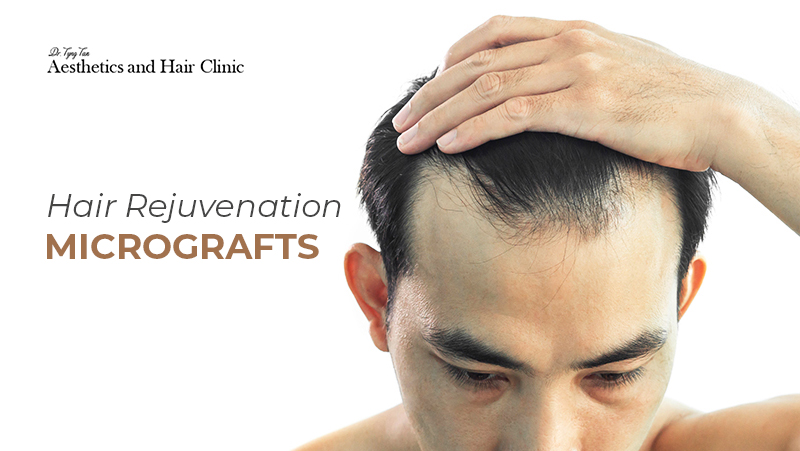
- Hair Rejuvenation Micrografts involve processing and reinjecting a patient’s own concentrated regenerative skin cells into areas of hair loss. This minimally invasive technique (specific systems may be FDA/CE approved) aims to improve scalp health and support natural hair regrowth, with results potentially noticeable over weeks to months.
- FUE (Follicular Unit Extraction) Hair Transplant Surgery meticulously transplants individual hair follicles from a donor area to thinning/bald areas using a small punch tool, resulting in minimal scarring. FUE aims for long-lasting, natural-looking restoration and is less invasive than older methods. Performed under local anaesthetic, its duration depends on the number of grafts; ‘no-shave’ options may be available.
Discussing your specific condition and goals with your doctor will help determine the most appropriate path forward.
Preparing for Your Consultation
To make the most of your visit to a dermatologist or trichologist:
- Document Your Hair Loss: Note when it started, how rapidly it progressed, and the amount of shedding.
- List Medications & Supplements: Include dosages for everything you’re taking.
- Review Medical History: Mention any recent illnesses, surgeries, or chronic conditions.
- Detail Your Stressors: Be prepared to discuss recent or ongoing stressful life events.
- Note Lifestyle Factors: Your diet, sleep patterns, and exercise habits are relevant.
- Write Down Questions: Prepare a list of your concerns and questions.
Your specialist will likely examine your scalp and hair, discuss your history, and may recommend blood tests or, rarely, a scalp biopsy to confirm the diagnosis and rule out other causes.
The Path to Recovery & Healthy Hair
Stress-induced hair loss, while alarming, is often reversible with the right approach. Ignoring it can lead to further frustration and potentially exacerbate the issue. By recognising the signs early, managing stress effectively, and seeking professional advice, you can take proactive steps towards halting excessive shedding and fostering healthy hair regrowth.
Remember, a holistic approach that prioritises both your mental and physical well-being is key. You are not alone in this journey.
Dr. Tyng Tan is a recognised hair restoration specialist who can help you explore personalised solutions. She is one of a few doctors approved by the Singapore Medical Council to carry out both FUE (Follicular Unit Extraction) and FUT (Follicular Unit Transplantation). Book a consultation to discuss your concerns and get the help you need.

About Dr Tyng Tan
Dr Tyng Tan has over ten years of experience treating male pattern baldness with the minimally invasive, non-strip method known as FUE (Follicular Unit Extraction) Hair Transplantation.

Hair loss seems like a losing battle for thousands of men in Singapore. Grow Your Hair Back To Normal With Our Safe & Minor Surgical Hair Transplant Procedure.