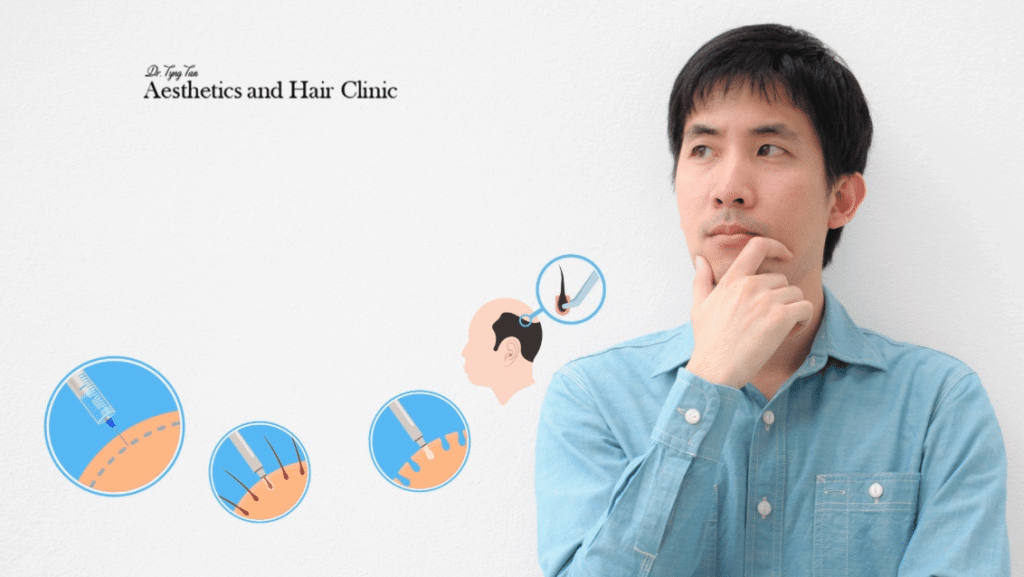
Singapore’s Work Stress Epidemic: The Hidden Hair Loss Connection
WORK STRESS & HAIR LOSS: How is Singapore Coping?

Did you know that certain professions have higher rates of stress-related hair loss? Occupations like enlisted military personnel, firefighters, and surgeons, known for their high-stress levels, often see an increase in hair loss among their ranks.
In Singapore’s fast-paced and achievement-oriented culture, work-related stress has become a growing concern. Demanding jobs, long working hours, and the constant pressure to succeed can take a toll on our well-being, including the health of our hair.
This blog delves into the prevalence of work-stress-induced hair loss in Singapore, explores specific workplace stressors that contribute to this issue, and offers practical coping mechanisms to manage stress and suggest solutions to hair loss.
The Prevalence of Hair Loss in Singapore
Hair loss is a widespread issue in Singapore, affecting a significant portion of our population. A 2022 study shows that 44.438% of women here reported hair loss as their primary hair concern. Similarly, an estimated 63% of men experienced hair loss due to androgenetic alopecia, also known as male pattern baldness.
The overall occurrence of alopecia in Singapore is around 3.8%. While genetics and medical conditions contribute to hair loss, lifestyle factors, especially stress, play a significant role. Nearly seven in 10 men will experience some form of male-pattern hair loss, a condition often exacerbated by stress, leading to accelerated hair thinning.
Work-Related Stressors in Singapore
Recent research revealed that 92% of employed respondents in Singapore experienced work-related stress, exceeding the global average of 84%. This alarming statistic is likely attributed to our rigorous work culture, characterised by long working hours and high-pressure environments, driven by the need to meet targets and deadlines.
The pressure to perform in such a competitive economy can also result in presenteeism, where employees continue working despite being unwell. Additionally, some workplaces in Singapore suffer from a toxic environment, fostering negative behaviours like bullying and disrespect, which further impact employee well-being and productivity.
Likewise, job insecurity is a major source of stress for employees due to economic shifts and technological advancements. This is further compounded by the lack of work-life balance, with work demands often encroaching on personal time. In fact, a 2024 Randstad study found that 41% of Singaporean workers resigned from their jobs in search of a better work-life balance. Moreover, a significant number of employees feel they have limited control over their workload and work processes, contributing to feelings of helplessness and stress.
Interestingly, the approach to work-life balance differs across generations. Older generations, such as Baby Boomers and Gen X, typically prefer a clear distinction between their work and personal lives. In contrast, younger generations, like Millennials and Gen Z, tend to favour work-life integration, where work and personal activities blend throughout the day.
The Link Between Stress and Hair Loss
Stress significantly impacts hair health through various biological mechanisms. Primarily, it disrupts the hair growth cycle, prematurely pushing hair follicles into a resting phase and causing excessive shedding (telogen effluvium). While chronic stress can impair stem cells responsible for hair regeneration, research suggests they can be reactivated to promote hair growth.
Stress can also trigger conditions like trichotillomania, an urge to pull out hair. Stress may also be a potential trigger for alopecia areata, an autoimmune condition causing hair loss. Cortisol release due to stress further disrupts the hair growth cycle. Additionally, stress reduces blood circulation to the scalp, depriving hair follicles of vital nutrients and oxygen, leading to hair weakening or hair loss.
As a coping mechanism, people are turning to mindfulness, making apps that offer guided meditation increasingly popular. Meanwhile, others are opting to adopt lifestyle changes, including exercising regularly, healthy eating habits, and prioritising sleep. Today there is a growing awareness of the importance of seeking professional help for mental health concerns, including work-related stress. There are also numerous support groups that offer a safe space to share experiences and connect with others facing similar challenges.

How Hair Loss Solutions Can Aid in Coping
Hair loss treatments can significantly help individuals cope with work-related stress and its associated hair loss through several mechanisms. One of the most immediate benefits is an improved appearance. Hair loss solutions can boost confidence, particularly in professional settings where appearance can influence self-perception and how others perceive you.
Improved self-esteem is another crucial benefit. Hair loss can negatively impact self-esteem and quality of life, affecting social, dating, and professional interactions. Hair loss treatments, from medications to simple cosmetic solutions, can help restore confidence and improve body image, leading to better social interactions and increased self-worth.
Hair loss can also cause emotional distress, leading to anxiety, self-consciousness, and depression. Hair loss solutions can alleviate these emotional burdens, allowing individuals to focus on managing the underlying causes of stress.
Ultimately, hair loss treatments can provide a sense of control in a situation that can often feel overwhelming. If you’re feeling overwhelmed by work stress, reaching out to a mental health professional can be a really beneficial step for managing it. And remember, if stress seems to be contributing to hair loss, take the time to research different hair loss treatments thoroughly and consult with qualified professionals before committing to anything.
Options For Hair Loss Treatment in Singapore
Dr. Tan Tyng Yuan, MBBS, has specialised expertise and more than 10 years of experience in hair loss treatments. She has earned degrees from University College London and Cardiff University, and certifications and fellowships in hair restoration, including ISHRS recognition. Dr. Tyng Tan is one of the few Singapore doctors approved by the Singapore Medical Council for both FUT and FUE hair transplants.
The Dr. Tyng Tan Aesthetics and Hair Clinic offers FUE (Follicular Unit Extraction) hair transplant, including the no-shave option, which is perfect for those wanting discreet treatment with minimal downtime and no scarring, especially those prone to keloids.
We also offer non-surgical and minimally invasive treatments like Hair Rejuvenation Micrografts and Low-Level Laser Therapy (LLLT). Micrografts, ideal for mild to moderate hair loss, use the patient’s tissue to stimulate hair growth naturally and safely with no downtime. LLLT boosts hair growth and healing, either as a standalone treatment or alongside others. Call +65 6235 0010 to schedule a consultation and explore your options.
References:
- Singapore Tops List as the Unhappiest Work Environment in Southeast Asia
- Singapore Alopecia Therapeutics (Hair Loss) Market Report 2022 to 2030 – Insights10
- Hair loss and your hormones – Singapore – The Straits Times
- How work-related stress affects employee health and productivity – Cigna Healthcare
- How stress causes hair loss | National Institutes of Health (NIH)
- Researchers discover how chronic stress leads to hair loss – Harvard Gazette
- Stress and hair loss: Are they related? – Mayo Clinic
- Stress and Hair Loss: Tips for Prevention and Management – AIHCP

About Dr Tyng Tan
Dr Tyng Tan has over ten years of experience treating male pattern baldness with the minimally invasive, non-strip method known as FUE (Follicular Unit Extraction) Hair Transplantation.